
Dangers of EMDR Therapy: What You Should Actually Know Before You Start
It's 11pm and you've got three tabs open about the "dangers of EMDR therapy," trying to decide if booking that consultation is smart or a mistake. That instinct to dig in first? It's a good one.
EMDR (eye movement desensitization and reprocessing) isn't new, and it isn't guesswork. It's been studied since the late 1980s as an effective treatment for trauma. Like anything that asks your brain to process traumatic memories, it comes with risks and side effects worth understanding. Most of what gets labeled a "danger" online is actually a sign that processing is happening the way it's supposed to. Like anything that asks your brain to process traumatic memories, it comes with risks and side effects worth understanding. Most of what gets labeled a "danger" online is actually a sign that processing is happening the way it's supposed to.
Here's what we'll cover:
The physical and emotional side effects people report most
What can genuinely go wrong, and how a trained therapist prevents it
Who should wait before starting EMDR therapy
Why EMDR is still one of the most recommended trauma therapies out there
Let's get into it.
Is EMDR Therapy Safe?
EMDR therapy is considered safe for most people, especially when a trained EMDR therapist paces the work instead of rushing into your hardest memories first. The eye movements themselves aren't what make EMDR risky. What happens before you get there is what matters.
At Your Journey Through, we treat that preparation as non-negotiable. Before any reprocessing starts, we get to know your history, your nervous system, and what "too much" actually feels like for you specifically. We're not running a one-size-fits-all script. We adjust the pace, the pressure, and even the type of bilateral stimulation, eye movements, tapping, or tones, to whatever your body can handle that day.
That doesn't mean EMDR feels easy. It means it's built to feel manageable, even when the memory underneath isn't.
Wondering if EMDR is right for you?
Talk it through with one of our EMDR-trained therapists in Raleigh. No pressure, just a real conversation.
What can go wrong with EMDR therapy?
The biggest risk is moving through a traumatic memory faster than your nervous system can handle, which can spike distress instead of easing it. A trained EMDR therapist prevents this with a thorough assessment and grounding techniques before reprocessing starts.
Physical Side Effects of EMDR Therapy
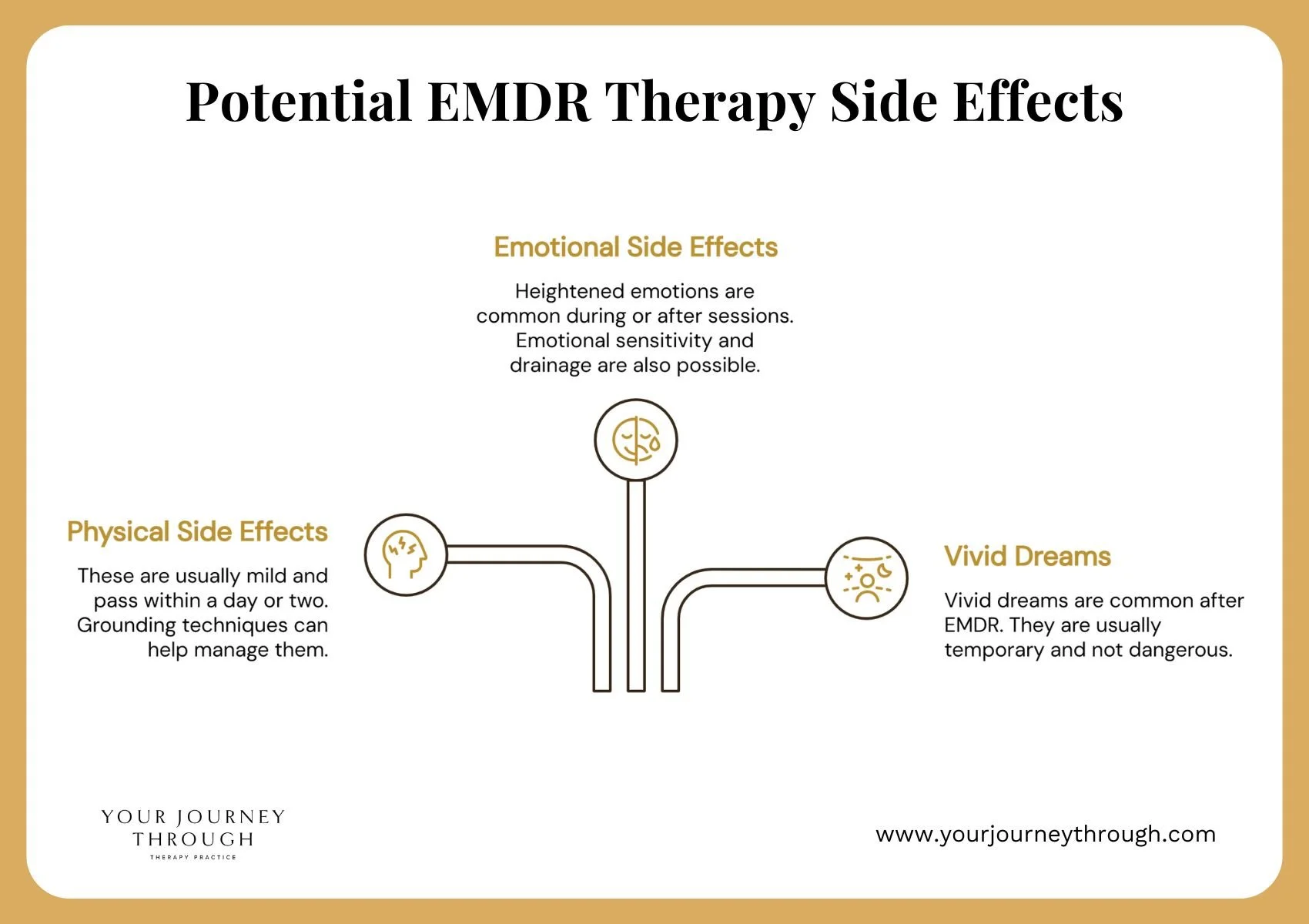
The physical side effects of EMDR therapy are usually mild and pass within a day or two. Your body just worked through something heavy, so a reaction makes sense.
People most often mention:
Headaches, often from the concentration and muscle tension involved in tracking eye movements
Fatigue, since reprocessing a memory takes real mental energy
Nausea or lightheadedness, especially during longer sessions
Muscle tension in the jaw, shoulders, or neck
What These Physical EMDR Therapy Side Effects Usually Mean
These physical sensations aren't a sign that something went wrong. They're closer to what happens after a hard workout. Your nervous system did real work, and now it's recovering. We always walk you through grounding techniques before you leave a session so you're not managing those physical reactions alone.

Emotional Side Effects of EMDR Therapy
Heightened emotions are one of the most common EMDR side effects, and they tend to show up during or right after a session rather than days later.
Common emotional reactions include:
Heightened emotions like sadness, anger, or anxiety surfacing more easily than usual
Emotional sensitivity for the rest of the day
Feeling emotionally drained, almost like an emotional hangover
Dissociation, or feeling a little "spacey" or disconnected, especially for clients with complex trauma histories
Vivid Dreams and Sleep Changes
Vivid dreams after EMDR are common, too. Your brain keeps working on what you processed while you sleep, which can show up as unusually detailed or emotional dreams for a night or two. Uncomfortable, not dangerous, and it usually settles on its own.
What Can Go Wrong with EMDR Therapy?
Most "EMDR went wrong" stories trace back to one thing: pacing. EMDR can sometimes trigger more distress than expected when a therapist moves through distressing memories faster than a client's nervous system can actually handle. That's also the honest answer to "can EMDR be harmful": most often when pacing and preparation are skipped or rushed.
That can look like retraumatization, where a session leaves you feeling worse instead of lighter, or dissociation that's hard to come back from on your own. Neither is common, and both are largely preventable.
How Pacing and Grounding Prevent It
This is why we never skip the assessment phase before EMDR treatment begins. A thorough assessment tells us whether you're ready for reprocessing, what your support system looks like, and which grounding techniques will actually work for your nervous system. If something feels like too much mid-session, we slow down or stop. You're in control of the pace, not the protocol.
How long do EMDR side effects last?
Most short-term side effects, like vivid dreams, fatigue, or feeling emotionally drained, fade within a day or two of a session. Anything lasting longer than a few days is worth mentioning to your therapist at your next appointment.
Other "Dangers of EMDR Therapy" You'll See Online
A couple of claims show up constantly in EMDR search results that deserve an actual answer instead of a shrug.
Can EMDR Create False Memories?
This is a real area of academic debate, not just internet rumor. Researchers at UNSW found no direct evidence that EMDR itself produces false memories, though memory in general is reconstructive, which means any therapy that revisits old memories carries some inherent risk. The real safeguard is in how EMDR is supposed to be practiced. A properly trained, EMDRIA-trained therapist works with the memories you already bring forward and never uses suggestive questioning or "memory recovery" techniques to go digging for buried trauma you don't remember.
Are There Long-Term Risks?
Here's an honest limitation worth naming. Most EMDR research tracks people for weeks or months after treatment, not years, so long-term outcome data is thinner than we'd like it to be. What the existing research does show is reassuring: EMDR Institute's research overview reports no significant adverse events across multiple clinical trials. That's not a guarantee, but it's a pretty different picture than "dangerous."
Who Should Wait Before Starting EMDR Therapy
Most people are good candidates for EMDR, whether they're working through childhood trauma or a single recent event. A few situations call for some groundwork first.
Signs You May Need to Stabilize First
You're in an active crisis or unsafe living situation
You have an unmanaged dissociative disorder that hasn't been assessed
You're in the middle of untreated, active substance use
You're carrying complex trauma and haven't built basic emotional regulation skills yet
None of this rules EMDR out forever. It just means your therapist, or another mental health professional on your team, will likely spend a few sessions building stability before reprocessing begins. If you're considering EMDR therapy and you're also managing other mental health conditions, loop in your healthcare provider so everyone's working from the same picture. Mention any of this during your first conversation with us, and we'll figure out the right starting point together.
Why EMDR Therapy Is Still Worth Considering
Here's the part that often gets buried under all the "dangers" headlines: EMDR has a strong research base behind it, and it's worth weighing the potential risks against what it can actually do.
Backed by Major Health Authorities
Dr. Francine Shapiro developed EMDR in 1987 after noticing that her own eye movements seemed to ease the intensity of disturbing thoughts. That accidental discovery became a structured, eight-phase therapeutic approach now taught and practiced worldwide, with each phase built around a specific safety check.
The American Psychological Association includes EMDR as a recommended treatment option for post-traumatic stress disorder, and the VA's National Center for PTSD notes that EMDR carries one of the highest recommendation ratings across major treatment guidelines for veterans and civilians alike.
Who should avoid EMDR therapy?
Almost no one needs to avoid EMDR permanently, but people in an active crisis, with unmanaged dissociative disorders, or active substance use are usually asked to stabilize first. EMDR still helps with these concerns, just often after some groundwork with a mental health professional.
How It Compares to Talk Therapy and CBT
One real limitation of traditional talk therapy is how much it can ask you to verbally relive a traumatic memory in detail. EMDR doesn't require that. You hold the memory in mind while your therapist guides bilateral stimulation, and your brain does the heavy lifting of reprocessing it, no extended verbal retelling required, the way Cognitive Behavioral Therapy (CBT) sometimes asks for.
For a single traumatic event, research from Cleveland Clinic shows reprocessing often takes just three to six sessions. More complex or long-standing trauma can take eight to twelve, sometimes more, still often faster than years of unresolved talk therapy alone.
How We Keep EMDR Safe at Your Journey Through
We use EMDR therapy across a lot of what we treat, not just single-incident trauma. It shows up in our work with anxiety, depression, and trauma processing, always starting with the same thing: a real conversation about what you're carrying and what pace feels survivable.
We're allies in this, not authorities handing you a plan you didn't have a say in.
Ready to Talk It Through?
Booking that first session can feel like its own kind of scary, especially when the thing you're trying to heal is the same thing making it hard to reach out.
Here's what that first step actually looks like: you tell us a little about what's going on, we ask some questions, and we figure out together whether EMDR, or something else entirely, is the right fit. No pressure, no scripts, no pretending you have to have it all figured out before you call.
Reach out to our EMDR team whenever you're ready. We'll meet you there.
