
EMDR for Anxiety Disorders: Does It Really Work?
You've probably tried a few things for anxiety already. Maybe you've done talk therapy, journaled, downloaded the meditation apps. Some of it helped. Some of it didn't. And the worry is still there.
If you've been wondering whether EMDR therapy could do something different, you're asking a really good question. Here's what this article covers:
Why EMDR may help with anxiety
Which anxiety disorders respond well to EMDR treatment
What an EMDR session looks like in real life
How EMDR and CBT compare
How to know if it's the right fit for you
EMDR for Anxiety Disorders: How Does It Work?
EMDR, short for Eye Movement Desensitization and Reprocessing, was developed by Dr. Francine Shapiro in the late 1980s to treat post-traumatic stress disorder. But researchers and clinicians quickly found it works well beyond PTSD, including for anxiety disorders, panic disorder, and more.
The core idea: anxiety often has roots in distressing memories your brain never fully processed. These may be obviously traumatic events, or they might be quieter moments, a time you felt humiliated, completely out of control, or just deeply unsafe. Your brain may have filed those experiences away, but they can still send signals.
EMDR uses bilateral stimulation to help your brain revisit and reprocess those traumatic memories. In most sessions, that means following your therapist's finger movements with your eyes while holding a distressing memory in mind. The goal isn't to erase what happened. It's to change how it feels, so it stops hijacking your nervous system years later.
Some researchers believe bilateral stimulation works similarly to what happens during REM sleep, when your brain naturally processes the emotional weight of the day. EMDR essentially helps that process along for the experiences that got stuck.

Why Anxiety Specifically Responds to EMDR
A lot of traditional psychotherapy focuses on shifting thought patterns in the present. EMDR goes deeper: it targets the memories and negative beliefs that created those patterns in the first place.
Things like "I'm not safe," "I can't handle this," or "Something bad is always about to happen." As those distressing memories are reprocessed, the emotional charge may begin to fade. You can think about the original experience without your body going into full alarm mode. And the symptoms of anxiety tied to it start to ease.
EMDR Therapy for Anxiety: Which Disorders Does It Treat?
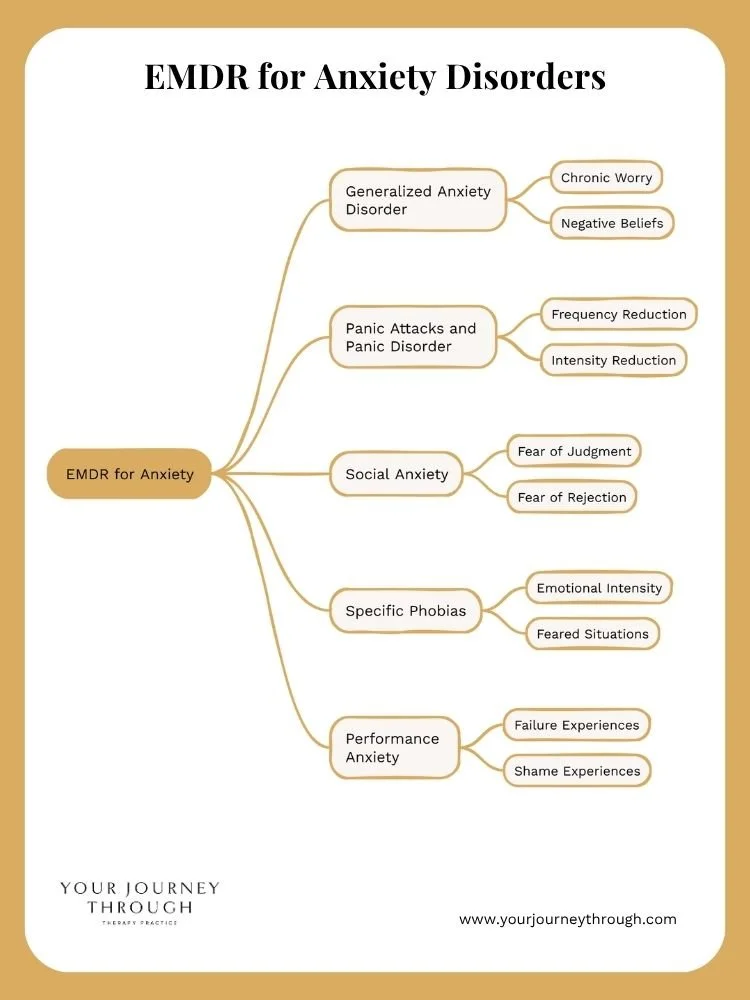
EMDR is not just for PTSD. Research suggests EMDR may be helpful for several anxiety-related concerns, especially when anxiety is connected to past distressing experiences, panic episodes, humiliation, shame, or fear memories.
Generalized anxiety disorder. EMDR may be helpful when chronic worry is connected to earlier experiences, negative beliefs, or a persistent sense of threat.
Panic attacks and panic disorder. EMDR for panic attacks addresses the experiences that originally set them off, reducing both frequency and intensity.
Social anxiety. Getting to the root of the fear of judgment, rejection, or humiliation.
Specific phobias. Reducing the emotional intensity tied to feared situations or objects.
Performance anxiety. Reprocessing earlier experiences of failure or shame that show up every time you're under pressure.
A 2020 meta-analysis published in the Journal of Psychiatric Research, which reviewed 17 randomized controlled trials, found EMDR produced significant reductions in anxiety, panic, and phobia symptoms. The EMDR International Association also notes that anxiety is often tied to past experiences that left a lasting imprint, even when they don't look like obvious trauma on the surface.
That's an important point. You do not always need one clear, obvious traumatic event to benefit from EMDR. Sometimes the target is a repeated pattern, a body sensation, a belief, or a memory that seems small but still carries emotional charge. A lot of people who come in struggling with anxiety can't point to one big thing. EMDR helps with that, too.
Can EMDR be done online for anxiety treatment?
Yes. Online EMDR can be effective for many people when it is offered by a trained therapist and the client has enough privacy, emotional stability, and grounding support to participate safely.
What Happens in an EMDR Session?
EMDR therapy involves a structured eight-phase process, but you don't need to memorize all eight phases. What's more useful is knowing what it actually feels like to sit in the room.
Your First Few Sessions Won't Include Eye Movements
Early EMDR sessions are about history, trust, and preparation. Your therapist will get to know what's driving your anxiety, identify specific memories or situations to target, and teach you grounding techniques so you have real tools to steady yourself when things get intense.
Nothing happens until you feel ready.
What Processing Actually Looks Like
Once you're in the processing phase, a typical EMDR session flows something like this:
You bring a specific target to mind — a memory, a disturbing thought, a belief, a body sensation tied to your anxiety
Your therapist guides the bilateral stimulation, usually by moving their fingers side to side while you follow with your eyes. Some therapists use taps or sounds instead
You let your mind go where it goes, without forcing anything. Associations come up naturally
After each set of eye movements, your therapist checks in with you. The process continues until the distress around the memory drops significantly
Once the negative belief loses its charge, you work together to strengthen a positive thought in its place
You are guided the whole way through. A good EMDR therapist will make sure you're never left alone with difficult material in the middle of a session.
What are the potential risks and side effects of EMDR therapy?
EMDR is considered safe, but it's normal to feel emotionally drained, have vivid dreams, or notice heightened feelings for a day or two after processing sessions. These effects are temporary and typically settle on their own.
EMDR vs. CBT for Anxiety: Two Different Approaches
Cognitive behavioral therapy is probably the most widely known anxiety treatment. It works by helping you identify and restructure unhelpful thought patterns, noticing when your brain is distorting reality and building skills to push back.
EMDR or CBT? They're not really in competition. They just work differently.
CBT focuses on changing how you think about anxiety right now. EMDR focuses on the memories and experiences that created the anxiety in the first place. Both have solid research behind them. A meta-analysis in Neuropsychiatric Disease and Treatment found EMDR comparable to, and in certain trauma-related cases more effective than, CBT for reducing post-traumatic and anxiety symptoms.
One thing EMDR does that CBT typically doesn't: it doesn't require you to talk in detail about painful experiences. You don't have to narrate what happened. The processing happens through bilateral stimulation, not through verbal analysis. For people who find it hard to put certain things into words, this can make EMDR feel like a real relief.
Some clients do both. CBT can build solid day-to-day coping skills, while EMDR may help process the earlier experiences or beliefs connected to the anxiety. Many people also benefit from exposure-based therapy, ACT, medication, mindfulness-based approaches, or a combination of treatments.
How Long Does EMDR Anxiety Treatment Take?
EMDR can be relatively focused compared with some forms of longer-term therapy. Some people work on a focused anxiety target in 6 to 12 sessions, while others need more time, especially if anxiety is connected to complex trauma, long-term stress, dissociation, or multiple painful experiences.
Some people notice real shifts after just a few processing sessions. Others need more time, especially if the anxiety is connected to repeated or layered experiences over the years.
A few things worth knowing going in:
Sessions are usually 60 to 90 minutes during the active processing phases
It's normal to feel more tired than usual afterward. Processing difficult material takes real energy
Things can feel stirred up between sessions. Vivid dreams, unexpected emotions, or a period of heightened awareness are all common and usually settle within a day or two
Online EMDR is a real option. Therapists can run full EMDR sessions via telehealth using screen-based bilateral stimulation tools, and it works well for a lot of people
Can EMDR therapy be effective if you don't remember the specific trauma?
Yes. EMDR targets the feelings, beliefs, and body sensations connected to distressing experiences, so a clear or detailed memory isn't required for it to work.
Is EMDR Right for You?
EMDR can help you heal from anxiety that hasn't budged with other approaches. It's worth exploring if any of these feel true:
Your anxiety feels tied to specific experiences, even ones that seem small or old
You've done talk therapy, and it helped, but something still feels stuck
You struggle to explain why you feel anxious; you just do
Panic attacks, physical sensations, or intrusive thoughts are part of your regular life
EMDR can be powerful, so a trained therapist will not rush into processing before you are ready. Some people need more time building grounding and stabilization skills first, especially if they are dealing with severe dissociation, active self-harm, recent trauma, substance misuse, unsafe living conditions, or emotions that feel unmanageable between sessions. This does not mean EMDR cannot help. It means the work needs to move carefully, with enough support in place.
Ready to Try a Different Way of Working With Anxiety?
Anxiety that won't quit isn't something you have to white-knuckle through. If the tools you've tried have helped a little but haven't gotten you all the way there, EMDR may be one option worth exploring.
Our therapists are trained in EMDR and work with anxiety in all its forms, from generalized anxiety and worry that never fully shuts off, to panic attacks, to anxiety rooted in experiences you've never quite been able to shake. We offer in-person sessions at our Raleigh, NC office and online therapy across North Carolina for anyone who'd rather start from home.
If you're curious whether EMDR could help with what you're dealing with specifically, we'd love to talk it through. Reach out to schedule a free consultation.